How much does a clothes iron cost to run?
Figures on this page are calculated from typical appliance wattages and the price per kWh you enter, not looked up from a bill. See how we calculate this.
What a clothes iron costs to run: typical 2000 W, about $26 a year. Adjust the figures to your own usage and electricity price.
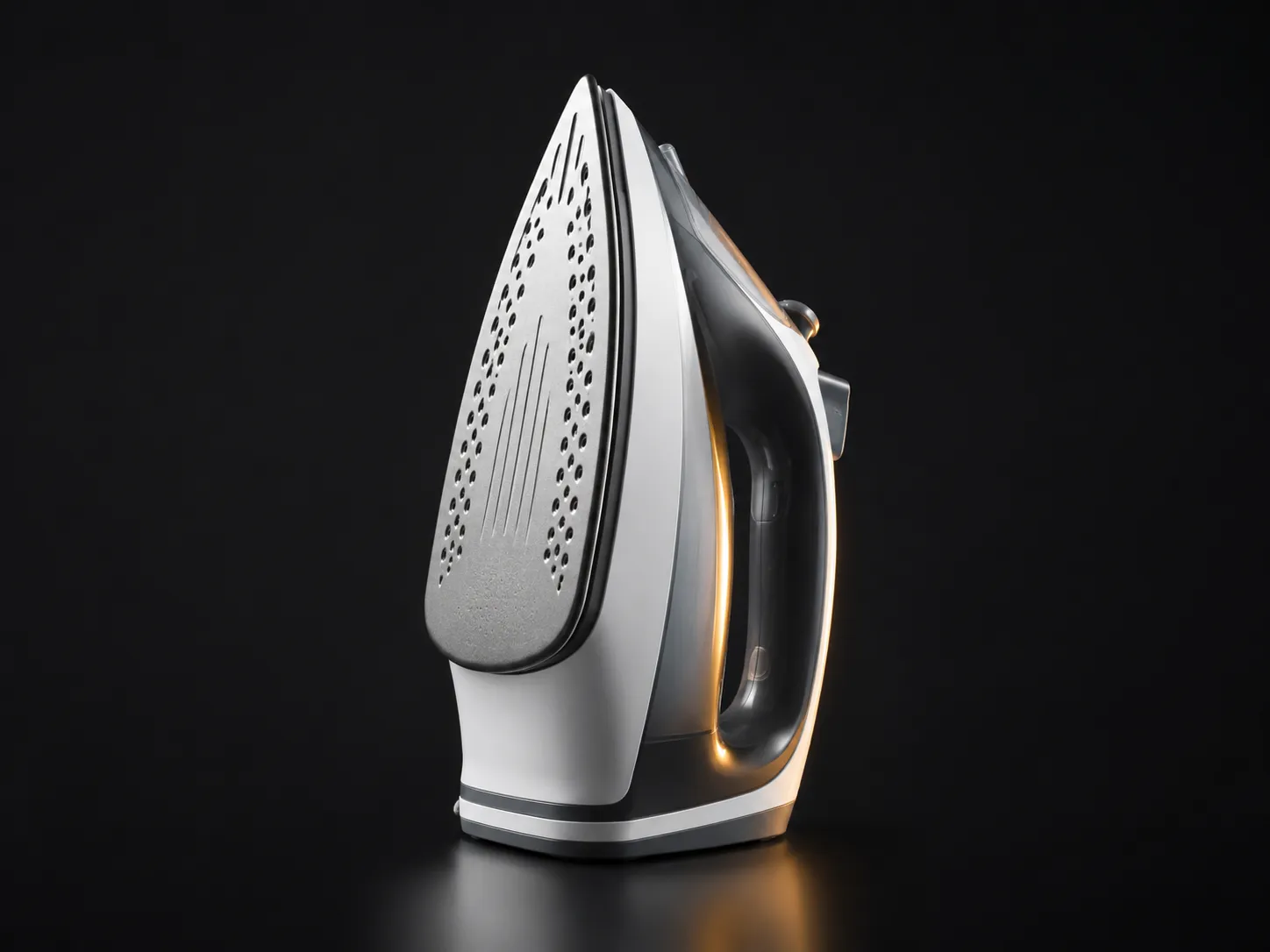
Your Clothes iron running cost
Costs about
/ month
- Per day
- Per year
- Energy per day
Change the hours and price to match your case.
Wattage and running cost
| Low | 1000 W |
|---|---|
| Typical | 2000 W |
| High | 3000 W |
| Typical use | 0.2 h/day |
| Per day | 0.4 kWh · $0.072 |
| Per month | 12 kWh · $2.19 |
| Per year | 146 kWh · $26 |
There is no hourly row, and that is deliberate: the 2000 W is what it draws while the element is on, a thermostat cycles it once it is up to temperature, and no published measurement says what share of the hour it actually draws. Printing the nameplate as if it were an hour's consumption would answer the question with a wrong number. Based on 0.2 h a day at $0.18/kWh, the US average. Change the hours and the price in the calculator above.
A clothes iron is a high-power appliance — usually 1,000 to 3,000 watts — but one that is used in short sessions, so its overall cost is modest for most households. The element heats the soleplate quickly, then thermostatically cycles on and off to hold the set temperature, so it does not draw full power the whole time it is switched on. The real cost depends on how often and how long you iron, which for most people is a session or two a week.
Because the heat-up and the thermostat cycling dominate, the efficient approach is to iron everything in one batch rather than heating the iron up repeatedly for a shirt at a time. Sorting garments by temperature and ironing the cooler ones first, while the iron warms up, also avoids waiting at full power. Steam settings use a little more energy to boil water, so use them only where you need them. Enter your iron's wattage and a realistic weekly ironing time above to see the cost.
A useful comparison is the garment steamer, which many people now use instead of an iron for quick jobs. Steamers heat less mass and often draw less overall for a couple of items, though a traditional iron is still efficient for a big batch pressed in a single heat-up. As always, ironing everything in one session is the habit that keeps the cost down.
Steam-generator irons are a different category worth distinguishing from a standard iron: instead of a small internal reservoir, they use a separate boiler that stays hot and pressurised throughout the session, often drawing close to its full wattage continuously rather than cycling like a basic iron. They press faster and handle large loads well, but that steady high draw means the running cost per session is usually higher than a standard iron's — worth factoring in if you are choosing between the two for occasional versus heavy ironing.
Nearly every search that reaches this page asks for consumption "per hour", and that is the one figure deliberately not printed here. The share of the hour the element actually spends drawing power depends on the fabric setting, on whether steam is running, on how long the iron stands on its heel between garments and on how cold the room is — so a single per-hour number would be a guess wearing the clothes of a measurement. What can be said is the shape of the answer: an hour of ironing lands under a kilowatt-hour rather than the two a 2,000 W label implies, which makes it one of the cheaper hours of electricity in the house. For your own iron, a plug-in energy meter over one full session settles it in a way no average can. One related surprise: a higher-rated iron is not a more expensive one to run. In India and much of East Africa this same appliance is called an iron box, and every figure on this page applies to it unchanged.
What a clothes iron costs in other countries
The figures above assume $0.18/kWh, the US average. A clothes iron does not change when it crosses a border — the price of the electricity it drinks does. Here is what its 146 kWh a year cost in the 14 countries with a page here, dearest first.
| Country | Per year | Per year (US$) |
|---|---|---|
| Ireland | 58 € | $67 |
| Germany | 57 € | $64 |
| United Kingdom | £47 | $63 |
| Belgium | 51 € | $58 |
| Austria | 48 € | $55 |
| Italy | 44 € | $50 |
| Spain | 39 € | $45 |
| Sweden | 437 kr | $45 |
| France | 38 € | $44 |
| Netherlands | 38 € | $44 |
| Australia | A$58 | $41 |
| Portugal | 35 € | $39 |
| United States | $26 | $26 |
| Canada | C$25 | $18 |
Each figure is in that country's own currency at its average all-taxes-included price; the dollar column is there so they can be set against each other. Ireland to Canada is a factor of 3.8 — same appliance, same hours, 3.8 times the bill. Follow a country for its real retailer tariffs and what makes up that price, or see the full electricity price comparison by country.
How to cut clothes iron running costs
- Iron a whole batch in one session rather than heating up for one garment at a time.
- Sort by temperature and start with the cooler fabrics while the iron heats.
- Use steam only where you need it — boiling water for steam uses extra energy.
- Switch it off a little early and use the retained heat for the last few items.
- Never leave a hot iron on unattended — for safety and to avoid wasted energy.
Frequently asked questions
How much does ironing cost?
A 2,000 W iron used about 20 minutes a day (thermostat cycling means less than full power) works out to only a few dollars a year for most households. Batch ironing keeps it low.
Does the iron use full power the whole time?
No. It draws full power to heat up, then the thermostat cycles the element on and off to hold the temperature, so average consumption is lower than the nameplate wattage.
Does steam ironing cost more?
A little, because producing steam means boiling water, which needs extra energy. Use steam only on fabrics that need it rather than continuously to keep the cost down.
How much electricity does an iron use per hour?
Under one kilowatt-hour for a typical 2,000 W iron, not the full two, because the element sits idle for much of the session. There is no honest single figure: the share of on-time changes with the fabric setting, the steam and how long the iron rests between garments. A plug-in energy meter over one session gives you a number for your own iron, which is worth more than anybody's average.
Does a higher-wattage iron cost more to run?
Usually not, and often the opposite. A 2,400 W iron reaches its temperature faster and recovers it quicker between garments than a 1,600 W one, so at the same setting it spends a smaller share of the session actually drawing power. The number on the label tells you how fast the iron gets hot, not what it will add to the bill — that is decided by how long you iron, not by how hard it can pull.