How much does an electric oven cost to run?
Figures on this page are calculated from typical appliance wattages and the price per kWh you enter, not looked up from a bill. See how we calculate this.
What an electric oven costs to run: typical 2400 W, about $51 a year. Adjust the figures to your own usage and electricity price.
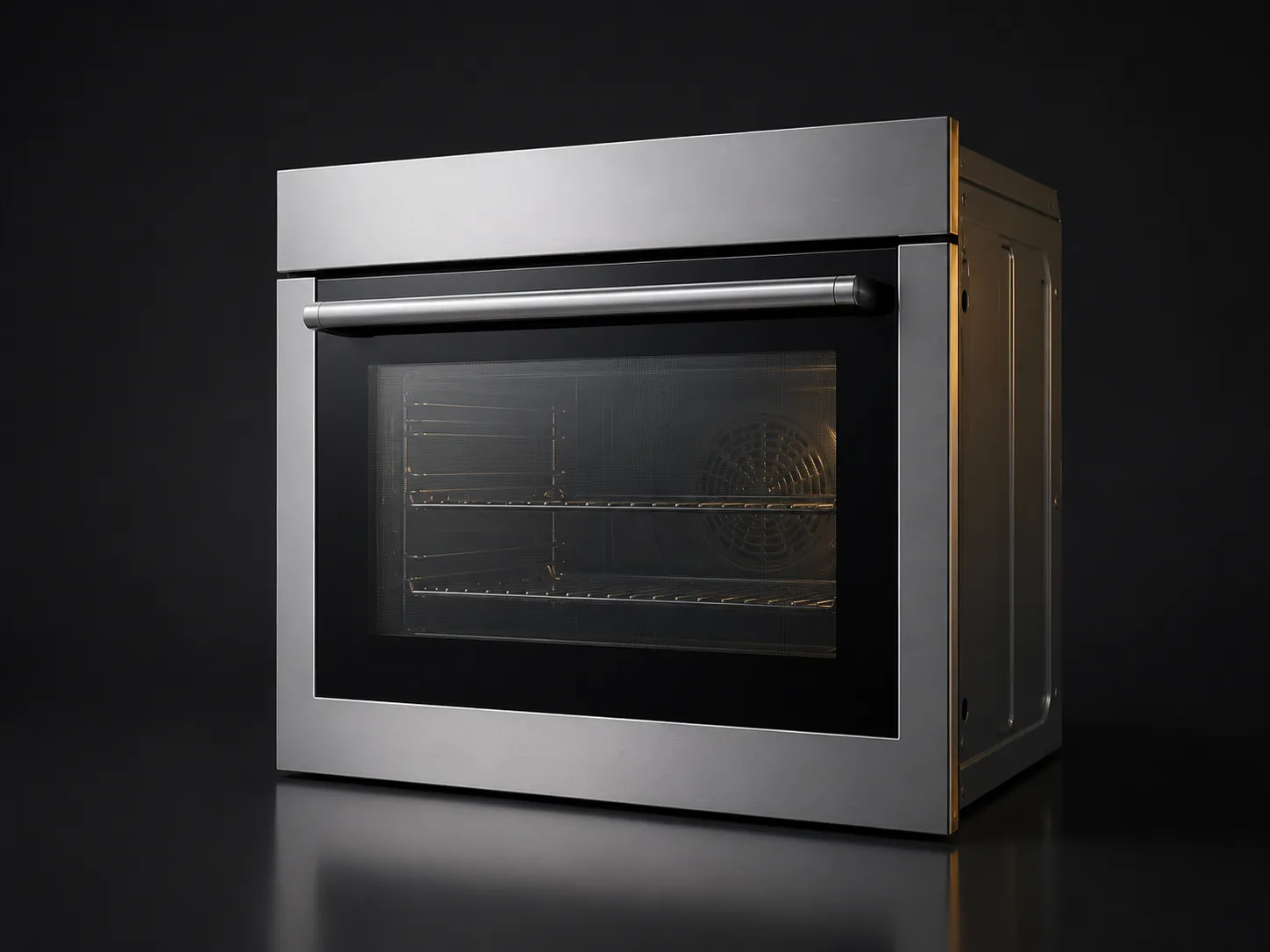
Your Electric oven running cost
Costs about
/ month
- Per day
- Per year
- Energy per day
Change the hours and price to match your case. The element cycles with the thermostat, so this applies ~65% of the power shown.
Wattage and running cost
| Low | 2000 W |
|---|---|
| Typical | 2400 W |
| High | 3500 W |
| Typical use | 0.5 h/day |
| Per hour of use | 1.56 kWh · $0.28 |
| Per day | 0.78 kWh · $0.14 |
| Per month | 24 kWh · $4.27 |
| Per year | 285 kWh · $51 |
The 2400 W is what it draws while the element is actually on — a thermostat cycles it once the appliance is up to temperature, so the hourly figure and everything below it use a ~65% duty cycle rather than the full rating. Based on 0.5 h a day at $0.18/kWh, the US average. Change the hours and the price in the calculator above.
An electric oven is a high-power appliance — typically 2,000 to 3,500 watts — but it is only used in short bursts, so its yearly cost depends heavily on how often you bake and roast. The heating elements draw full power to reach temperature, then cycle on and off to hold it, so an hour of baking uses less than the nameplate wattage would suggest across the whole hour. This page uses an hours-per-day approach; enter a realistic daily average (half an hour a day is a common household figure) and your price to see the cost.
Because the oven is powerful, small habits make a real difference. Preheating longer than needed, opening the door mid-bake (which drops the temperature and forces the elements back on), and heating a large oven for a single small dish all waste energy. For small portions a microwave, air fryer or toaster oven does the same job for a fraction of the power, which is why they are worth reaching for on weeknights.
The oven's thermal mass also works in your favour if you plan around it. Once it is hot, cooking several dishes together, or slipping something else in straight after, spreads the heat-up cost over more food. Retained heat means you can often switch a conventional oven off a few minutes before the end and let the residual warmth finish the job — a small habit that adds up across a year of cooking.
Fan (convection) ovens add one more lever: because the moving air transfers heat more evenly, most recipes cook just as well at a temperature roughly 20°C lower than a conventional static oven would need, or fit more food into the same batch at the same setting. That lower operating temperature, not any difference in element wattage, is where a fan oven's real running-cost saving over a conventional one comes from.
An oven's label wattage — 2,000 to 3,500 W, around 2,400 W typical — is what the elements draw when they are on, and after the first few minutes they are not on continuously. Once the cavity reaches temperature the thermostat cycles them, so a full hour of baking uses noticeably less than a full hour at the rated power. The part that does run flat out is the preheat, which is why a short bake is proportionally far more expensive than a long one: the same preheat is paid whether you cook for fifteen minutes or ninety.
What an electric oven costs in other countries
The figures above assume $0.18/kWh, the US average. An electric oven does not change when it crosses a border — the price of the electricity it drinks does. Here is what its 285 kWh a year cost in the 14 countries with a page here, dearest first.
| Country | Per year | Per year (US$) |
|---|---|---|
| Ireland | 114 € | $131 |
| Germany | 111 € | $125 |
| United Kingdom | £91 | $122 |
| Belgium | 100 € | $114 |
| Austria | 94 € | $108 |
| Italy | 85 € | $97 |
| Spain | 77 € | $88 |
| Sweden | 851 kr | $88 |
| France | 74 € | $85 |
| Netherlands | 74 € | $85 |
| Australia | A$114 | $80 |
| Portugal | 68 € | $77 |
| United States | $51 | $51 |
| Canada | C$48 | $34 |
Each figure is in that country's own currency at its average all-taxes-included price; the dollar column is there so they can be set against each other. Ireland to Canada is a factor of 3.8 — same appliance, same hours, 3.8 times the bill. Follow a country for its real retailer tariffs and what makes up that price, or see the full electricity price comparison by country.
How to cut electric oven running costs
- Only preheat as long as the recipe needs — many dishes can go in as it heats.
- Cook several things at once while the oven is hot to spread the cost.
- Use the fan (convection) setting: it cooks at a lower temperature and faster.
- Resist opening the door; each peek drops the temperature and restarts the elements.
- For small portions use a microwave, air fryer or toaster oven instead.
Frequently asked questions
How much does it cost to run an electric oven for an hour?
A 2,400 W oven uses about 1.56 kWh over an hour of baking — roughly $0.28 at $0.18/kWh — because the elements only draw their full rating while heating, then cycle at around 65% to hold temperature. Higher temperatures and longer cooks cost more.
Is an air fryer cheaper than an oven?
For small portions, usually yes. An air fryer heats a much smaller space, so it reaches temperature faster and uses less energy for the same food. For large meals the oven can still win.
Does oven temperature change the cost much?
Yes. A higher setpoint means the elements run more to hold it, and longer cooks add up. Using the fan setting lets you drop the temperature by around 20 °C for the same result.
How many watts is an electric oven?
Between 2,000 and 3,500 W, with about 2,400 W typical for a single built-in oven. That is the draw with the elements on, not a steady average — once the oven is up to temperature the thermostat switches them on and off, so the real consumption over an hour of cooking is lower than the rated figure suggests.
How much does preheating an oven cost?
Preheating runs the elements at close to full power for ten to fifteen minutes, which is about 0.4 to 0.6 kWh — roughly $0.07 to $0.11 at $0.18/kWh. It is a small sum on its own, but it is the same sum whatever you cook, so it dominates the cost of anything that only needs a short time in the oven. Cooking two things in one preheated oven is the easiest saving there is.