How much does a dehumidifier cost to run?
Figures on this page are calculated from typical appliance wattages and the price per kWh you enter, not looked up from a bill. See how we calculate this.
What a dehumidifier costs to run: typical 300 W, about $45 a year. Adjust the figures to your own usage and electricity price.
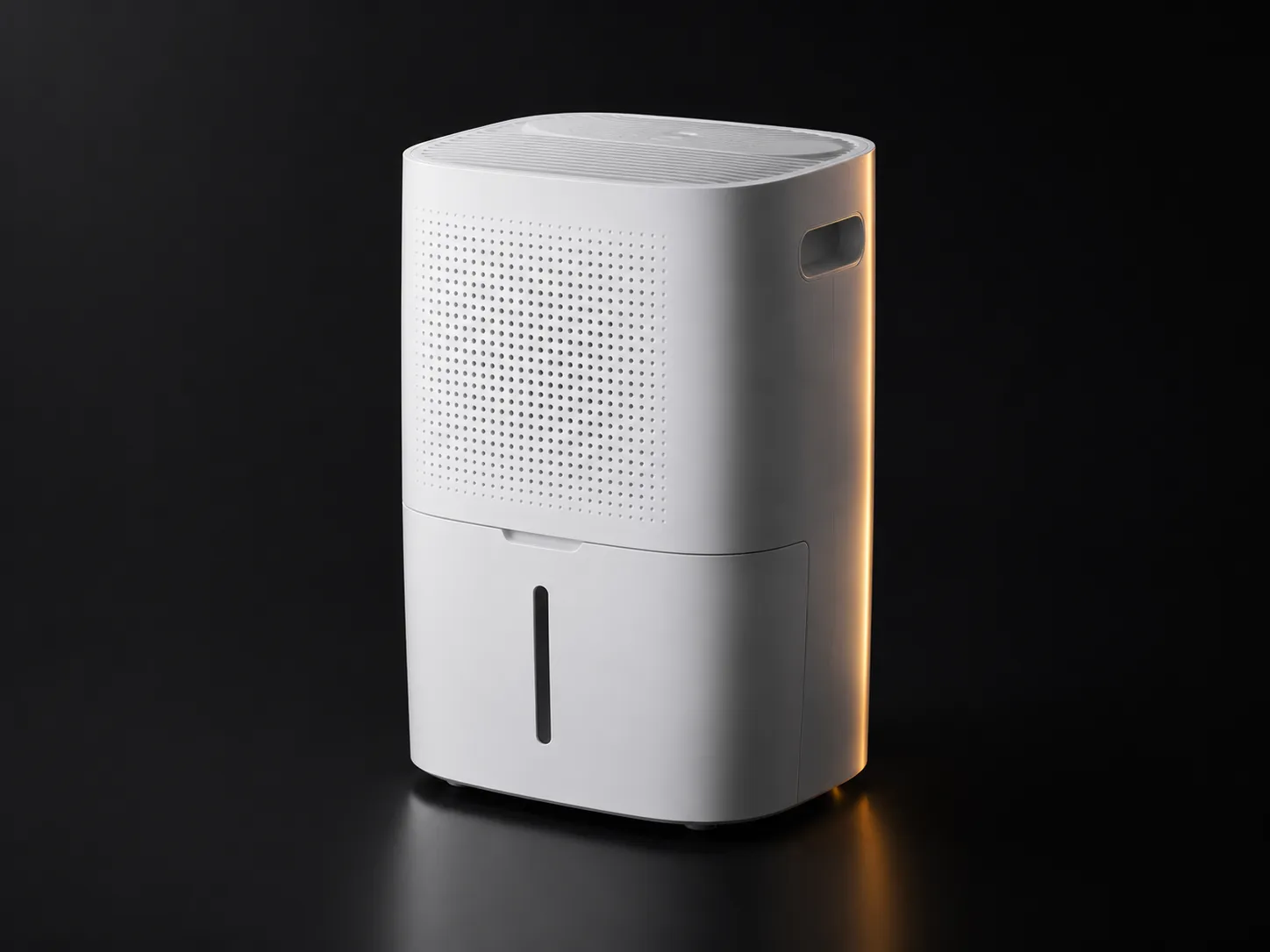
Your Dehumidifier running cost
Costs about
/ year
- Per day
- Energy this season
Assumes ~120 days of use a year — adjust it for your climate and habits.
Wattage and running cost
| Low | 150 W |
|---|---|
| Typical | 300 W |
| High | 700 W |
| Typical use | 7 h/day, ~120 days/year |
| Per hour of use | 0.3 kWh · $0.054 |
| Per day | 2.1 kWh · $0.38 |
| Per month | 64 kWh · $12 |
| Per season | 252 kWh · $45 |
It only runs part of the year, so the last row is the whole season (~120 days) rather than twelve months, and "per month" means a month in season. Cost at $0.18/kWh, the US average.
A dehumidifier removes moisture from the air to prevent damp, mould and that clammy feeling, and its running cost depends heavily on the type and how long it runs. Most household compressor dehumidifiers draw 150 to 500 watts, while desiccant models can use more but work better in cold rooms. Because damp problems often mean running the unit for hours a day, especially in winter or in a poorly ventilated room, those modest watts add up over a season.
The power a dehumidifier uses is small compared with a heater, but it is easy to leave running longer than needed. Many models have a humidistat that switches the compressor off once the target humidity is reached, cycling only as needed — much cheaper than running continuously. Sizing matters too: an undersized unit runs constantly and never quite wins, while a right-sized one reaches target and idles. Enter your unit's wattage and realistic daily hours above to see the seasonal cost.
It also helps to run a dehumidifier only in the room and the season that actually need it, rather than continuously all year round. Tackling the source of the moisture — better ventilation, drying laundry outdoors, fixing leaks — reduces how hard and how long the unit has to work, and that is where the real savings on this appliance come from.
Sizing is usually quoted in litres removed per day rather than watts, and matching it to the room matters as much as the wattage: a small 10-12 L/day unit suits a single damp bedroom or bathroom, while a whole small flat or basement typically needs a 20-30 L/day model to keep up. An undersized unit for the space runs almost continuously and still won't quite hit target humidity, which is the single most common reason a dehumidifier's real running cost ends up higher than expected.
What a dehumidifier costs in other countries
The figures above assume $0.18/kWh, the US average. A dehumidifier does not change when it crosses a border — the price of the electricity it drinks does. Here is what its 252 kWh a season cost in the 14 countries with a page here, dearest first.
| Country | Per season | Per year (US$) |
|---|---|---|
| Ireland | 101 € | $116 |
| Germany | 98 € | $111 |
| United Kingdom | £81 | $108 |
| Belgium | 88 € | $101 |
| Austria | 83 € | $96 |
| Italy | 76 € | $86 |
| Spain | 68 € | $78 |
| Sweden | 753 kr | $78 |
| France | 66 € | $76 |
| Netherlands | 66 € | $76 |
| Australia | A$101 | $71 |
| Portugal | 60 € | $68 |
| United States | $45 | $45 |
| Canada | C$43 | $30 |
Each figure is in that country's own currency at its average all-taxes-included price; the dollar column is there so they can be set against each other. Ireland to Canada is a factor of 3.8 — same appliance, same hours, 3.8 times the bill. Follow a country for its real retailer tariffs and what makes up that price, or see the full electricity price comparison by country.
How to cut dehumidifier running costs
- Use the humidistat so the compressor stops at your target humidity instead of running non-stop.
- Right-size the unit to the room — an undersized one runs constantly and costs more.
- Close windows and doors in the room being dried so it doesn't fight fresh humid air.
- Empty the tank or fit continuous drainage so it doesn't switch off full and restart cold.
- Fix the source of damp where you can — ventilation and leaks — so it runs less.
Frequently asked questions
How much does a dehumidifier cost to run?
A 300 W unit running seven hours a day through a ~120-day damp season uses about 252 kWh a year — roughly $45 at $0.18/kWh — but with a humidistat it cycles off often, so real cost is usually much lower.
Does the humidistat save money?
Yes, a lot. Instead of running continuously, the unit stops once the room reaches the target humidity and restarts only when needed, so it draws power for a fraction of the time.
Compressor or desiccant — which is cheaper?
Compressor models are usually more efficient in warm rooms; desiccant units use more power but keep working in cold spaces where compressors struggle. Match the type to where you'll use it.