How much does a space heater cost to run?
Figures on this page are calculated from typical appliance wattages and the price per kWh you enter, not looked up from a bill. See how we calculate this.
What a space heater costs to run: typical 1500 W, about $113 a year. Adjust the figures to your own usage and electricity price.
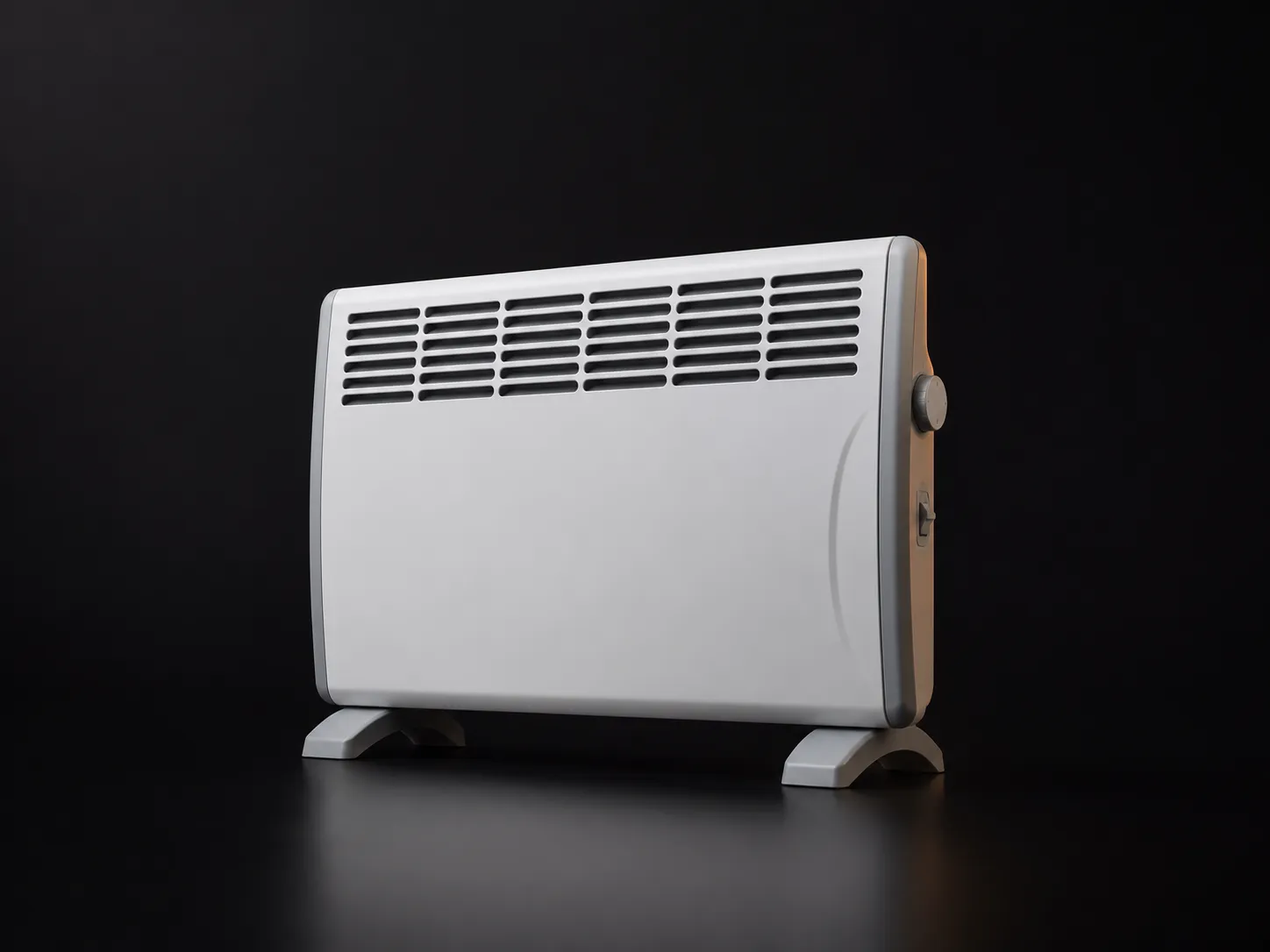
Your Space heater running cost
Costs about
/ year
- Per day
- Energy this season
Assumes ~120 days of use a year — adjust it for your climate and habits.
Wattage and running cost
| Low | 750 W |
|---|---|
| Typical | 1500 W |
| High | 3000 W |
| Typical use | 3.5 h/day, ~120 days/year |
| Per hour of use | 1.5 kWh · $0.27 |
| Per day | 5.25 kWh · $0.95 |
| Per month | 160 kWh · $29 |
| Per season | 630 kWh · $113 |
It only runs part of the year, so the last row is the whole season (~120 days) rather than twelve months, and "per month" means a month in season. Cost at $0.18/kWh, the US average.
An electric space heater is cheap to buy and expensive to run — the opposite of most appliances. Nearly all of them draw between 1,000 and 3,000 watts and convert essentially all of it to heat, so there is no such thing as a more 'efficient' electric heater: a 2,000 W fan heater, oil-filled radiator and halogen heater all produce the same heat from the same power. What changes is comfort and how the heat is delivered, not the running cost, which is set almost entirely by wattage and hours. This page uses an hours-per-day approach across the heating season.
Because the power is high and heaters often run for hours, the cost adds up fast. A single 2,000 W heater running four hours a day costs roughly the same each day as leaving a dozen efficient appliances on — which is why heating one room electrically can quietly dominate a winter bill. The trick is never to heat space you are not using: a heater warming an empty room, or fighting a draught from an open door, is pure waste.
The genuinely cheaper options are about targeting rather than hardware. Heating only the room you are in, using the heater's thermostat and timer so it is not on when you are asleep or out, and combining it with warm clothing and draught-proofing all cut hours off the total. If you are heating the same rooms every day all winter, a heat pump is far cheaper to run per unit of heat — but for occasional top-up warmth, a plug-in heater used sparingly is fine.
Every plug-in electric heater turns essentially all the electricity it draws into heat, which means a 1,500 W halogen, a 1,500 W oil-filled radiator and a 1,500 W fan heater all cost exactly the same per hour. There is no such thing as an energy-saving electric heater at the same wattage, whatever the box says. What genuinely differs is how the heat is delivered and therefore how long the thing runs: a heater with a working thermostat cycles off once the room is warm, and one you leave on full does not. The saving is in the running time, never in the technology.
What a space heater costs in other countries
The figures above assume $0.18/kWh, the US average. A space heater does not change when it crosses a border — the price of the electricity it drinks does. Here is what its 630 kWh a season cost in the 14 countries with a page here, dearest first.
| Country | Per season | Per year (US$) |
|---|---|---|
| Ireland | 252 € | $290 |
| Germany | 246 € | $277 |
| United Kingdom | £202 | $271 |
| Belgium | 221 € | $252 |
| Austria | 208 € | $239 |
| Italy | 189 € | $214 |
| Spain | 170 € | $195 |
| Sweden | 1,884 kr | $195 |
| France | 164 € | $189 |
| Netherlands | 164 € | $189 |
| Australia | A$252 | $176 |
| Portugal | 151 € | $170 |
| United States | $113 | $113 |
| Canada | C$107 | $76 |
Each figure is in that country's own currency at its average all-taxes-included price; the dollar column is there so they can be set against each other. Ireland to Canada is a factor of 3.8 — same appliance, same hours, 3.8 times the bill. Follow a country for its real retailer tariffs and what makes up that price, or see the full electricity price comparison by country.
How to cut space heater running costs
- Heat only the room you are in and shut the door to keep the warmth in.
- Use the thermostat and timer so it turns off when you are warm, asleep or out.
- Do not believe 'energy-saving heater' claims — all electric heaters cost the same per kWh.
- Draught-proof windows and doors so the heater is not fighting cold air.
- For all-winter heating of the same rooms, a heat pump is far cheaper to run.
Frequently asked questions
Which electric heater is cheapest to run?
None is cheaper than another at the same wattage — they all turn electricity fully into heat. A 2,000 W oil radiator and a 2,000 W fan heater cost the same per hour. Only wattage and hours change the bill.
How much does a space heater cost to run?
A 1,500 W heater running three and a half hours a day costs about $0.95 daily at $0.18/kWh — roughly $113 over a ~120-day heating season. A 3,000 W heater, or longer hours, doubles that.
Is a heat pump cheaper than an electric heater?
For sustained heating, yes, by a lot. A heat pump moves several units of heat per unit of electricity, while a plug-in heater gives one, so it can cost a third as much per unit of heat delivered.
How much does a space heater cost per hour?
A 1,500 W heater uses 1.5 kWh an hour, about $0.27 at $0.18/kWh. A 750 W setting halves both figures, and a 3,000 W unit doubles them. Because all electric resistance heaters are equally efficient, that arithmetic holds for any of them — the wattage on the label is the whole story.
How much does a space heater add to the electric bill each month?
Running a 1,500 W heater three and a half hours a day adds about 160 kWh a month, roughly $29 at $0.18/kWh. Seven hours a day doubles it to around $58. That is the figure that surprises people: a single portable heater used seriously through a cold month can cost more than everything else in a small flat put together.