How much does an electric water heater cost to run?
Figures on this page are calculated from typical appliance wattages and the price per kWh you enter, not looked up from a bill. See how we calculate this.
What an electric water heater costs to run: typical 3000 W, about $284 a year. Adjust the figures to your own usage and electricity price.
Your Electric water heater running cost
Costs about
/ month
- Per day
- Per year
- Energy per year
Always on, based on a ~6% duty cycle.
Wattage and running cost
| Low | 1500 W |
|---|---|
| Typical | 3000 W |
| High | 4500 W |
| Typical use | Runs continuously |
| Per hour of use | 0.18 kWh · $0.032 |
| Per day | 4.32 kWh · $0.78 |
| Per month | 132 kWh · $24 |
| Per year | 1,577 kWh · $284 |
It is plugged in all the time, but the motor only runs part of it: the hourly figure and everything above it use a ~6% duty cycle, not 3000 W around the clock. Cost at $0.18/kWh, the US average.
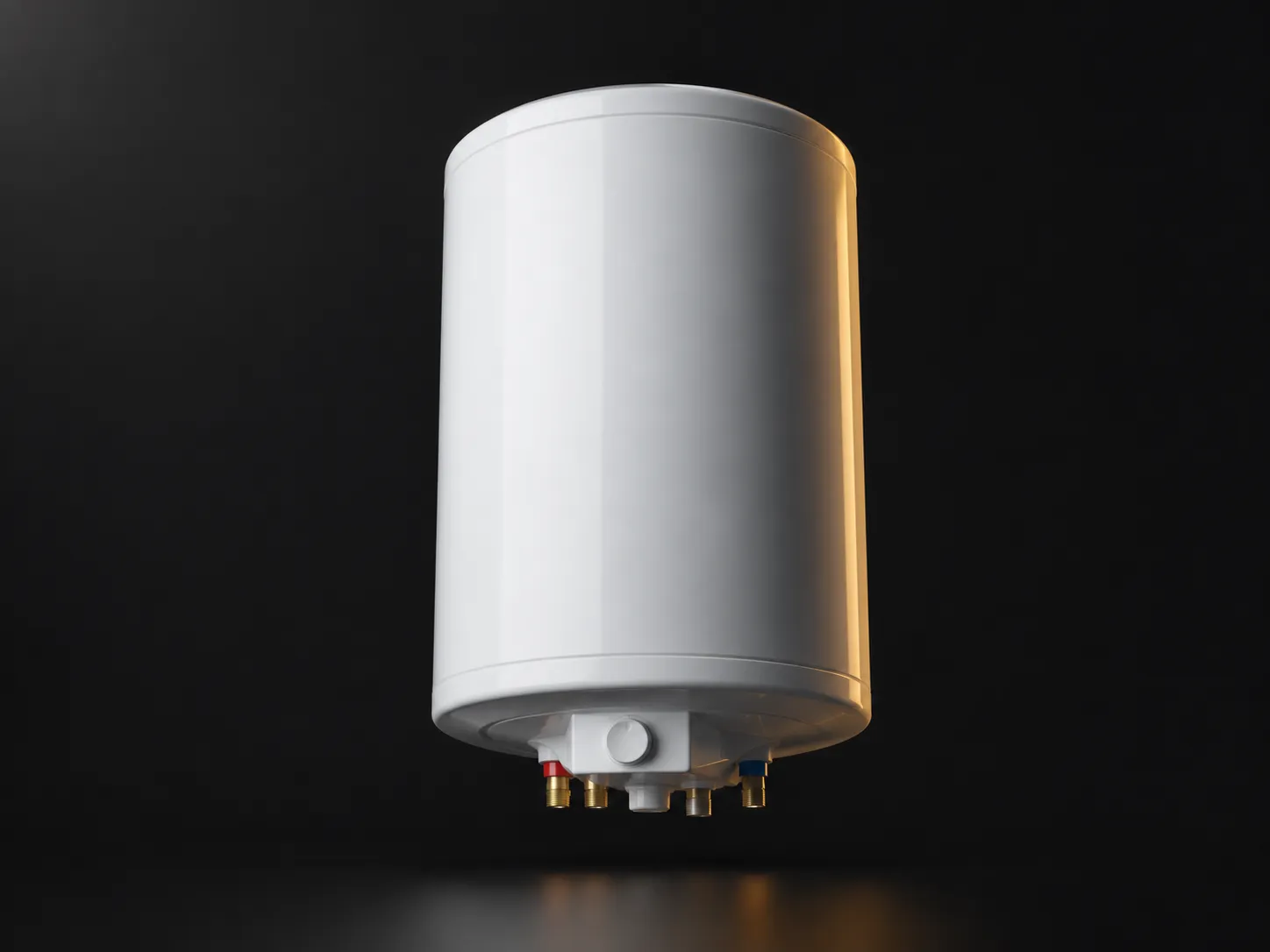
Water heating is one of the largest energy uses in a home, often second only to space heating, because hot water is used every day for showers, washing up and cleaning. A storage water heater has a powerful element — commonly 3,000 watts — but it does not run constantly. It heats the tank, then switches off, and only comes back on to replace heat lost from the tank and to reheat after you draw hot water. This page models that with a low average duty cycle, so the yearly figure reflects real household use rather than the element running flat out.
Two things drive the cost: how much hot water you actually use, and how much heat the tank loses while just sitting there. A poorly insulated older cylinder can lose a surprising amount of heat around the clock, which the element quietly replaces — energy spent heating water nobody used. Setting the thermostat no higher than about 60 °C (hot enough for safety, not scalding) and insulating the tank and its pipes are the classic savings.
How you heat also matters. On a time-of-use tariff, heating the tank overnight on a cheaper rate and coasting through the day can cut the cost noticeably. Households that use little hot water may find an instantaneous or point-of-use heater avoids standing losses altogether, while heavy users benefit most from a well-insulated tank and shorter showers. Enter your heater's power and your price above for a realistic yearly estimate.
Tank size is the other lever, separate from wattage: a single-person flat with a 50-80 litre tank reheats faster and loses less standing heat than a family home's 150-250 litre cylinder, so the same size element runs a noticeably lower duty cycle in a smaller tank. If you live alone in a home sized for a family, downsizing the tank — or switching to instantaneous heating — often saves more than any thermostat tweak, because you are heating and reheating far more water than one person actually uses.
What an electric water heater costs in other countries
The figures above assume $0.18/kWh, the US average. An electric water heater does not change when it crosses a border — the price of the electricity it drinks does. Here is what its 1,577 kWh a year cost in the 14 countries with a page here, dearest first.
| Country | Per year | Per year (US$) |
|---|---|---|
| Ireland | 631 € | $725 |
| Germany | 615 € | $694 |
| United Kingdom | £505 | $678 |
| Belgium | 552 € | $631 |
| Austria | 520 € | $599 |
| Italy | 473 € | $536 |
| Spain | 426 € | $489 |
| Sweden | 4,715 kr | $489 |
| France | 410 € | $473 |
| Netherlands | 410 € | $473 |
| Australia | A$631 | $442 |
| Portugal | 378 € | $426 |
| United States | $284 | $284 |
| Canada | C$268 | $189 |
Each figure is in that country's own currency at its average all-taxes-included price; the dollar column is there so they can be set against each other. Ireland to Canada is a factor of 3.8 — same appliance, same hours, 3.8 times the bill. Follow a country for its real retailer tariffs and what makes up that price, or see the full electricity price comparison by country.
How to cut electric water heater running costs
- Set the thermostat to about 60 °C — hot enough to be safe, not wastefully scalding.
- Insulate an older tank and its hot-water pipes to cut standing heat losses.
- On a time-of-use tariff, heat the tank overnight on the cheaper rate.
- Shorter showers and fixing dripping hot taps cut the hot water you pay to heat.
- If you use little hot water, a point-of-use heater avoids heating a whole tank.
Frequently asked questions
Why doesn't the calculator run the full wattage all day?
A storage heater's element only runs to heat the tank and replace losses, not continuously. Running 3,000 W for 24 hours would hugely overstate the cost, so a realistic low duty cycle is applied instead.
What temperature should a water heater be set to?
Around 60 °C is the usual advice: hot enough to limit bacteria and comfortable for use, without wasting energy keeping water scalding hot. Higher settings raise both cost and standing losses.
Does insulating the tank really help?
Yes, especially on older cylinders. A tank jacket and lagged pipes cut the heat that escapes while nobody is using hot water, which the element would otherwise keep replacing all day and night.