EV Home Charging Cost Calculator
Estimate what charging your electric car at home costs — per full charge, per 100 km and per year — from your battery, efficiency and price per kWh.
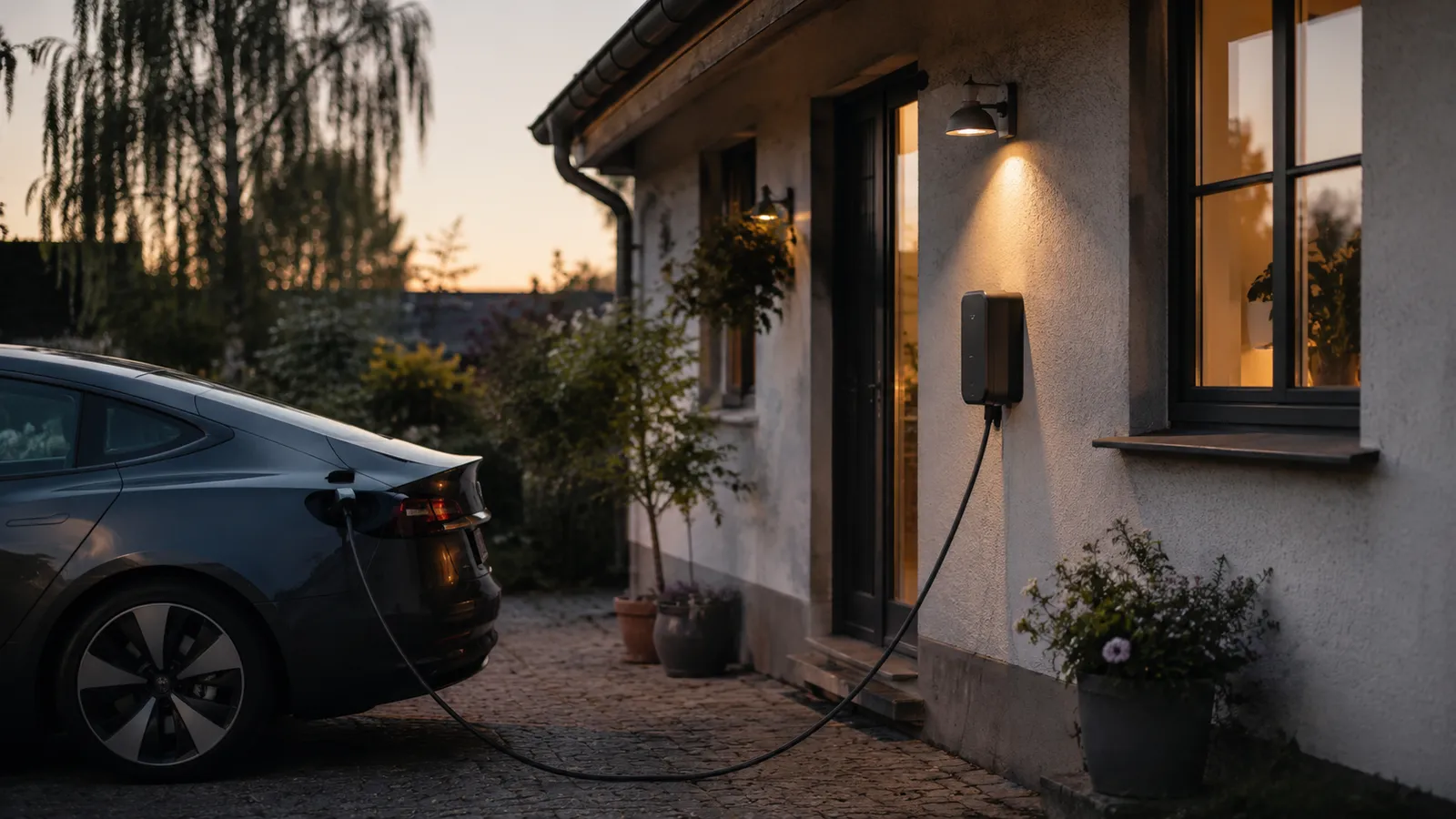
Charging an electric car at home is usually far cheaper than filling a tank — but how much cheaper? Enter your battery size, your car's consumption, your yearly mileage and your electricity price to see the cost per full charge, per 100 km and per year.
EV home charging calculator
Costs about
/ year
- Per full charge
- Per 100 km
- Per month
Use an off-peak night rate for your real charging cost.
How the math works
Some energy is lost as heat while charging, so you pay for a little more than reaches the battery. Energy from the socket per 100 km is consumption ÷ efficiency. Multiply by your price for cost per 100 km, and by your yearly distance (in hundreds of km) for the annual cost.
Worked example: at 17 kWh/100 km and 90% efficiency, you draw 17 ÷ 0.90 = 18.9 kWh per 100 km from the wall. At $0.18/kWh that is $3.40 per 100 km; over 12,000 km a year, about $408. A full 60 kWh charge costs roughly $12.00 measured at the wall.
Assumptions and limits
This models home AC charging at a steady efficiency (usually 85–92%). It ignores battery preconditioning, cabin heating, cold-weather range loss and long-term degradation, all of which raise real-world consumption. Public rapid charging costs several times more. If you are on a time-of-use tariff, enter your off-peak night rate — that is when most home charging happens.
When this calculator helps most
Reach for this when deciding between home charging and public rapid charging for a specific trip, when sizing up whether switching to an EV tariff is worth it, or when comparing two cars with different efficiency ratings before buying. Because it works per 100 km, it's also a fair way to compare an EV's running cost directly against a petrol or diesel car's fuel cost per 100 km, if you do that maths separately.
Mistakes that throw off the estimate
The most common mistake is entering the manufacturer's official consumption figure and then ignoring real-world losses on top of it — cold weather, motorway speeds or a loaded car can raise real consumption 20–40% above the official figure, especially in winter. The second is charging-cost confusion: if you're on a flat tariff you pay the same rate day and night, but if you're on a time-of-use tariff and charge overnight, using your daytime rate here will overstate the true cost substantially — always use the rate for the hours charging actually happens.
Comparing against a petrol or diesel car
To put the per-100-km figure this calculator gives you side by side with a petrol or diesel car, work out that car's fuel cost per 100 km the same way: fuel consumption per 100 km × price per litre. A typical petrol car using 7 L/100 km at a common pump price often lands in a broadly similar range to mid-tier public EV charging, but well above home EV charging in most markets — home charging is usually where most of an EV's running-cost advantage actually comes from, not the car itself. If you mostly charge at home and only occasionally use public rapid charging, blend the two roughly in proportion to how often you use each, rather than assuming every km costs the home-charging rate.
What it costs in practice
Yearly home-charging cost by distance driven and how much the car uses per 100 km, at $0.18/kWh.
| Km per year | 15 kWh/100 km | 18 kWh/100 km | 22 kWh/100 km |
|---|---|---|---|
| 5,000 | $135 | $162 | $198 |
| 10,000 | $270 | $324 | $396 |
| 20,000 | $540 | $648 | $792 |
Your own price and habits change these — the calculator above uses your numbers.
Frequently asked questions
Why divide by charger efficiency?
Not all energy from the socket reaches the battery. Home AC charging is roughly 85–92% efficient, so you pay for a bit more than the battery's rated kWh.
Is home charging cheaper than public chargers?
Almost always. Home electricity typically costs a fraction of public rapid-charging rates, especially on an off-peak overnight tariff.
How can I charge more cheaply at home?
Charge overnight on a time-of-use or EV tariff, avoid topping up during peak hours, and if you have solar, charge when the panels are producing.